
The *passato prossimo* is a compound tense.It is a combination two verbs +past particpile. The structure of the passato prossimo is divided into two parts. The first part comprises the verb avere or essere, and the other part contains the past participle. The second part, the past participle, changes according to the verb essere or avere.
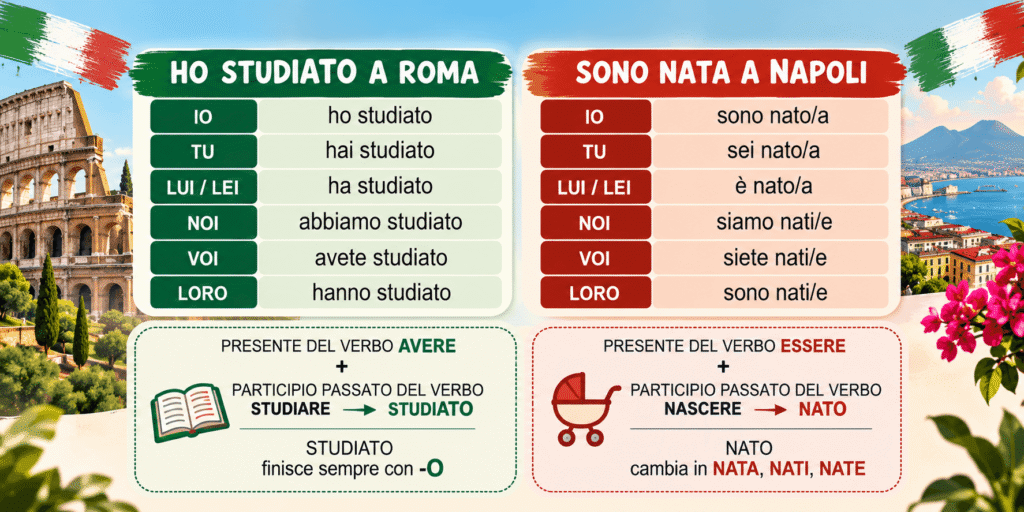
Passato Prossimo with Essere
If the verb changes with essere, then the end part of the past participle ends with -o (masculine singular), -a (feminine singular),-i masculine plural),-e(feminine plural) suffix.Have a look at the diagram below on the use of the verb essere to make the passato prossimo:
Passato Prossimo – Verbo ESSERE
| Pronoun | Italian | English | Punjabi |
|---|---|---|---|
| IO | sono nato/a | I was born | ਮੇਰਾ ਜਨਮ ਹੋਇਆ |
| TU | sei nato/a | You were born | ਤੁਹਾਡਾ ਜਨਮ ਹੋਇਆ |
| LUI / LEI | è nato/a | He / She was born | ਉਸ ਦਾ ਜਨਮ ਹੋਇਆ |
| NOI | siamo nati/e | We were born | ਅਸੀਂ ਪੈਦਾ ਹੋਏ ਸੀ |
| VOI | siete nati/e | You (plural) were born | ਤੁਸੀਂ (ਸਾਰੇ) ਪੈਦਾ ਹੋਏ ਸੀ |
| LORO | sono nati/e | They were born | ਉਹ ਪੈਦਾ ਹੋਏ ਸਨ |
Passato Prossimo with Avere
If the present tense verb changes with avere.Then the end word of the past participle contains the -o suffix while forming passato prossimo. Check the diagram to understand verb avere to make passato prossimo.
Passato Prossimo – Verbo AVERE
| Pronoun | Italian | English | Punjabi |
|---|---|---|---|
| IO | ho studiato | I studied | ਮੈਂ ਪੜ੍ਹਿਆ ਸੀ |
| TU | hai studiato | You studied | ਤੁਸੀਂ ਪੜ੍ਹਾਈ ਕੀਤੀ |
| LUI / LEI | ha studiato | He / She studied | ਉਸ ਨੇ ਪੜ੍ਹਾਈ ਕੀਤੀ |
| NOI | Abbiamo studiato | We studied | ਅਸੀਂ ਪੜ੍ਹਾਈ ਕੀਤੀ |
| VOI | avete studiato | You (plural) studied | ਤੁਸੀਂ (ਸਭ ਨੇ) ਪੜ੍ਹਾਈ ਕੀਤੀ |
| LORO | hanno studiato | They studied | ਉਨ੍ਹਾਂ ਨੇ ਪੜ੍ਹਾਈ ਕੀਤੀ |
Rule For Passato Prossimo Formation
Now one question must arise in your mind. How do you check whether the verb changes according to essere or avere?. Don’t worry in this blog will be get step by step guidancance to change the present tense verb to the past tense verb(Passato Prossimo) .
- Step 1.Check whether the verb is movable or not.
- Step 2.Change the ending of past participle .
If the verb is movable, then use ESSERE to change the present tense verb into the past tense verb(passato prossimo). ESSERE is used for all intransitive verbs and Reflecive verbd .Otherwise, the verb changes with the AVERE rule.AVERE is used for all tranative verbs.
Now you may get confused what is transitive and intransitive verbs.Intranstive verbs are those who have direct object(that answer the question who or what).In contrast transitive verbs are those who does’t have direct object.
Trick: If in any sentence subject is not present then use Essere verb to form passato prossimo.</p
AVERE to make Passato Prossimo
For Instance
to eat: is not a movable verb . Therefore, use avere to form the passato prossimo. Hence,mangiare changes to io ho mangiato.
Also keep in mind that the end of the verb mangiare, which is– are, is replaced with -ato.
The suffix for all Avere verbs changes according to the table mention below:
| -ARE | -ERE | -IRE |
| -ARE Changes to -ATO | -ERE Changes to UTO | -IRE Changes to ITO |
| CANTARE —>CANTATO | VENDERE—>VENDUTO | DORMIRE —>DORMITE |
Also keep in mind that past participle ending suffix doesn’t depend upon gender and number of subject in case of AVERE .
Essere to make Passato Prossimo
If the verb is movable, for example, ANDARE (to go), then it converts to the passato prossimo with ESSERE.Let’s understand with examples.
Example
- I go changes as io vango then as per ESSERE passato prossimo it will become io ho venuto.
- We go(Noi andate) in past is We went .Therefore We went changes as Noi siamo and andati(for male plural )//Noi siamo andate(for female plural)//Noi siamo andati(group of male and female plural).
Also keep in mind that the suffix also depends upon gender and number of subject in case of ESSERE.If the subject is male /female then -o/-a will add to sufffix.If subject is male /female in plural then in the end of suffix -i/-e will add.
Participi NON Regolari( Irregular Participle)
| Infinitive | Participle | Passato prossimo/Past | Meaning in English | Meaning in Punjabi |
| Accendere | Acceso | Io ho acceso | I turned on | ਮੈਂ ਚਾਲੂ ਕੀਤਾ |
| Aprire | Aperto | Io ho aperto | I opened | ਮੈਂ ਖੋਲ੍ਹਿਆ |
| Bere | Bevuto | Io ho bevuto | I drank | ਮੈਂ ਪੀਤਾ |
| Chiedere | Chiesto | Io ho chiesto | I asked | ਮੈਂ ਪੁੱਛਿਆ |
| Chiudere | Chiuso | Io ho chiuso | I am done | ਮੈਂ ਕੰਮ ਕਰ ਲਿਆ ਹੈ |
| Conoscere | Conosciuto | Io ho Conosciuto | I have known | ਮੈਨੂੰ ਪਤਾ ਹੈ |
| Correre | Corso | Io ho Corso
Io Sono corso |
I ran | ਮੈਂ ਦੌੜਿਆ |
| Dare | Dato | Io ho dato | I gave | ਮੈਂ ਦਿੱਤਾ |
| Decidere | Deciso | Io ho deciso | I have decided | ਮੈਂ ਫੈਸਲਾ ਕਰ ਲਿਆ ਹੈ |
| Dire | Detto | Io ho detto | I said | ਮੈਂ ਕਿਹਾ |
| Dividere | Diviso | Io ho diviso | I have divided | ਮੈਂ ਵੰਡਿਆ ਹੈ। |
| Essere | Stato | Io Sono stato | I have been | ਮੈਂ ਰਿਹਾ ਹਾਂ |
| Fare | Fatto | Io ho fatto | I did it | ਮੈਂ ਕਰ ਲ਼ਿਆ |
| Leggere | Letto | Io ho letto | I read | ਮੈਂ ਪੜ੍ਹਦਾ ਹਾਂ |
| Mettere | Messo | Io ho messo | I put | ਮੈਂ ਪਾਇਆ |
| Morire | Morto | Io ho morto | I died | ਮੈਂ ਮਰ ਗਿਆ |
| Nascere | Nato | Io ho nato | I was born | ਮੇਰਾ ਜਨਮ ਹੋਇਆ ਸੀ |
| Offerire | Offerto | Io ho offerto | I offered | ਮੈਂ ਪੇਸ਼ਕਸ਼ ਕੀਤੀ |
| Perdere | Perso | Io ho perso | I lost | ਮੈਂ ਹਾਰ ਗਿਆ |
| Prendare | Preso | Io ho preso | I took it | ਮੈਂ ਲੈ ਲਿਆ। |
| Ridere | Riso | Io ho riso | I laughed | ਮੈਂ ਹੱਸ ਪਿਆ |
| Rimanere | Rimasto | Io Sono rimasto | I remained | ਮੈਂ ਰਿਹਾ |
| Rispondere | Riposto | Io ho riposto | I have replied | ਮੈਂ ਜਵਾਬ ਦੇ ਦਿੱਤਾ ਹੈ। |
| Rompere | Rotto | Io ho rotto | I broke up | ਮੈਂ ਟੁੱਟ ਗਿਆ |
| Scendere | Sceso | Io ho sceso
Io Sono sceso |
I went down | ਮੈਂ ਹੇਠਾਂ ਚਲਾ ਗਿਆ। |
| Scrivere | Scritto | Io ho scritto | I wrote | ਮੈ ਲਿਖਿਆ |
| Spegnere | Spento | Io ho spento | I turned off | ਮੈਂ ਬੰਦ ਕਰ ਦਿੱਤਾ। |
| Spendere | Speso | Io ho speso | I spent | ਮੈਂ ਖਰਚ ਕੀਤਾ |
| Spingere | Spinto | Io ho spinto | I pushed | ਮੈਂ ਧੱਕਾ ਦਿੱਤਾ |
| Vedere | Visto | Io ho visto | I saw | ਮੈਂ ਦੇਖਿਆ |
| Venire | Venuto | Io Sono venuto | I came | ਮੈਂ ਆ ਗਿਆ |
| Vincere | Vinto | Io ho vinto | I won | ਮੈਂ ਜਿੱਤ ਗਿਆ |
Passato Prossimo for Reflexive Verbs
Rules that apply for Regular and irregular verbs also apply for reflexive verbs .In case of reflexive verb passato prossimo Past participle doesn’t follow the subject .Therefore past participle is not the conjugated part of the verb .It will be the auxiliary conjugated part of the verb.Hdnce the participle goes before the conjugated part of the verb.
Keep in mind for making the passato prossimo (past tense) for reflexive verbs ESSERE verbs will be used.
Example
ALZARSI (We stood up) in passato prossimo changes as NOI ci siamo alzati/alzate.
Steps to change the reflexive verb to passato prossimo.
- Step1: Subject(Not mandatory)
- Step2: Participle(mi,to,ci,si)
- Step3: Essere at the present tense.
- Step4: Past participle suffix will be changes as per gender male or female and for singular and plural.
Read More: Use of Stare + Gerundio
